
Drive south from the Montagne Noire, between Toulouse and Montpellier, and the road eventually climbs into a small village with a church belltower the local winemakers call "the beacon of the cru." With its twin bays and flat stone roof, it stands over the village and the wide terrace of the Minervois spread out below — and on a clear day, the Mediterranean is just visible on the horizon, less than 50 kilometres away.
The name itself is almost as old as the landscape suggests. The earliest written record, from 1069, calls the place Lavineira — "a place planted with vines." In 1999, after years of work led by local pioneers Maurice Piccinini and Roger Piquet, this small patch of Minervois became the very first cru officially recognized in the Languedoc.
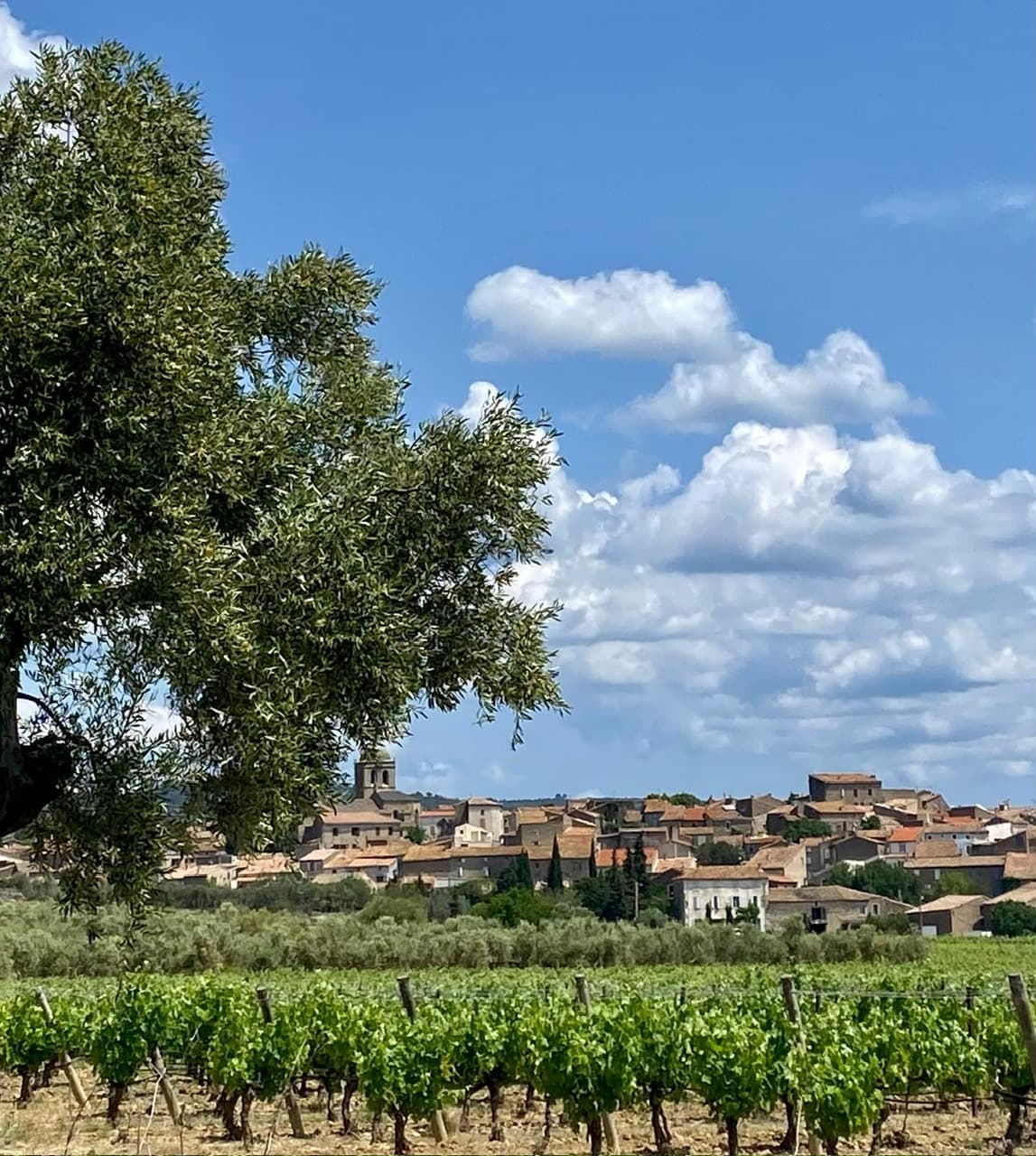
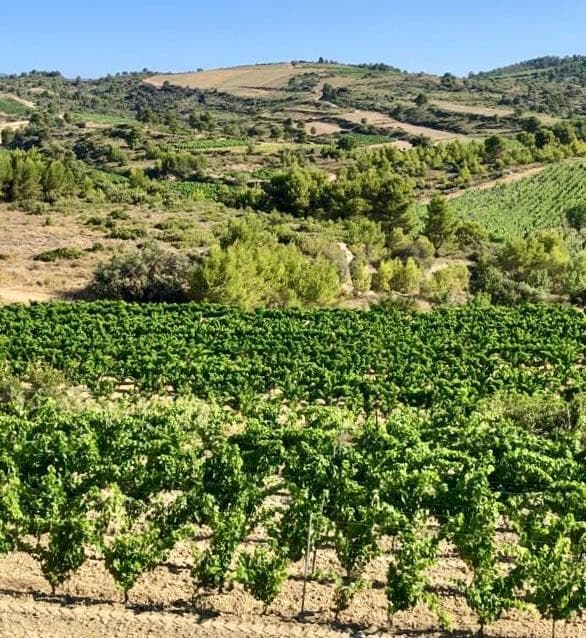
Today, 350 hectares are dedicated to the cru itself, scattered across a wider official zone of 2,700 hectares spanning six village districts — La Livinière, Siran, Cesseras, Félines-Minervois, Azille and Azillanet. The vines grow up to 400 metres above sea level, on the Causse de Minerve — a limestone slab shaped over millions of years by erosion into gorges, sandstone hills and pebble-strewn terraces.
What makes the wines distinct comes down to a fairly simple equation: strong mineral soils, south-facing slopes, and barely 400–500 millimetres of rain a year. At night, breezes sweep down off the plateau and cool everything back down, softening the tannins and giving the wines their characteristic elegance. The backbone is nearly always the same trio — Syrah, Grenache and Carignan — producing wines with ripe fruit, the scent of garrigue and olives, sometimes truffle, a cool mint edge, and spice.
It's also a landscape with a very long memory. Excavations at the Aldène cave show people have lived here for over 6,000 years. Dolmens still stand on the plateaus around Pépieux, Félines and Cesseras. Two Romanesque chapels survive — Centeilles, with 15th-century frescoes, and Saint-Germain near Cesseras. Even the old marble quarries above Félines-Minervois have a place in this history: the deep red Turquin and Griotte stone from here was once shipped off to build Versailles.
Around forty winemakers work within the cru today, among them Château Cesseras and Domaine de la Senche — two of the producers we work with directly.